

 View Cart
 sales@dataq.com
 330-668-1444
 RSS Feeds


When deciding between a USB and Ethernet interface, it’s important to weigh the advantages and disadvantages of both. In this application note I’ll outline the benefits (and drawbacks) of each interface; helping you to choose the best product for you’re application.
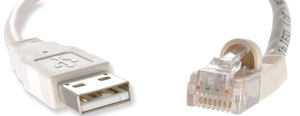
When it comes to an instrument with a USB interface, the most obvious benefit is cost. An instrument with a USB interface is generally $100 to $200 less expensive than its Ethernet counterpart. In addition, USB instruments are easier to install and most PCs have plenty of USB ports to choose from.
On the downside, a USB instrument can only be accessed from the PC that it’s connected to, over a relatively short distance.
| USB Advantages | Ethernet Advantages |
| Less Expensive | LAN Connectivity |
| More USB Connections | Cable Length up to 100 Meters |
| Easy Installation | Wireless Capability (Wi-Fi or Cellular) |
| Direct Data Upload (DI-71x series only) | |
| Daisy-chainable for Synchronous Data Acquisition (DI-720/730/785/788 series only) |
While slightly more expensive, Ethernet instruments offer a great deal of flexibility. An Ethernet instrument can be connected directly to a PC via an Ethernet cable up to 100 meters long. LAN (local area network) connectivity allows you to access an Ethernet instrument from any PC on your network. In addition, using third-party Wi-Fi equipment; you can acquire data wirelessly from up to 200 feet away (depending on the wireless equipment and operating environment). You can even acquire data over the internet!
An additional benefit of the Ethernet interface for DI-71x, stand-alone users is the ability to upload data directly to a PC from the on-board SD memory card (max rate ˜ 3,300 samples per second). Users with a USB interface must removed the SD card from the DI-71x and placed it in an SD card reader in order to retrieve data.
DI-720/730/785/788 users benefit from an Ethernet interface as well with the ability to daisy-chain multiple units together and acquire data synchronously!
In short, if your aim is simply to view real-time data, in the immediate vicinity of the device under test and store that data on your local hard drive; a USB instrument is the economical choice. If, on the other hand, you’re interested in a product with the flexibility and expandability outlined above, consider a product with an Ethernet interface.
Follow Us


 Categories:
  Tags:
Tags: 

